
About Covalent Organic Frameworks (COFs)
Covalent organic frameworks (COFs) are an emerging class of materials, first reported in 2005 (2D-COFs) and 2007 (3D-COFs). COFs are crystalline porous solids formed by regularly and periodically polycondensing building block molecules. Because no substance is finer than a molecule, COFs are the finest 'jungle gym' that can be created. The function and pore size can be designed by choosing building block molecules. Since COFs are usually composed of light elements only, they are metal-free, lightweight, easy to dispose of, and environmentally friendly. Covalent bonds contribute to the high thermal and chemical stability of COFs. Because of these advantages, COFs have been proposed for a variety of applications.
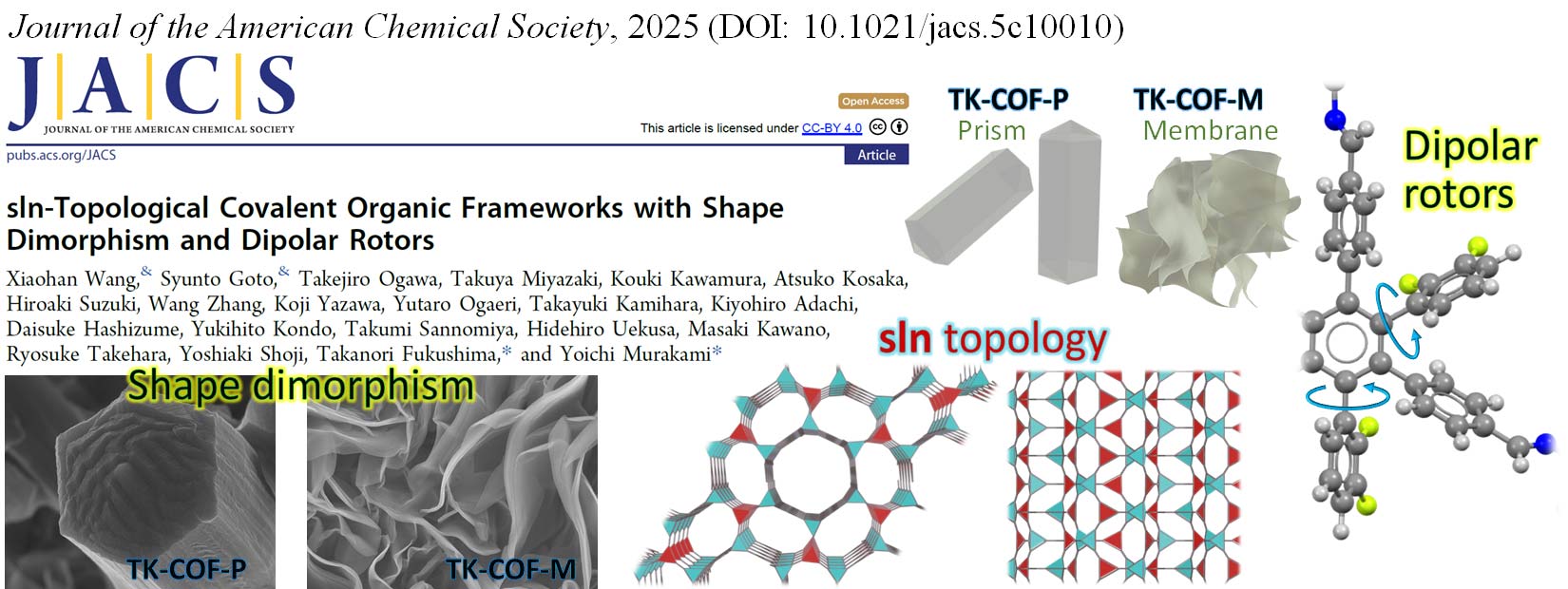
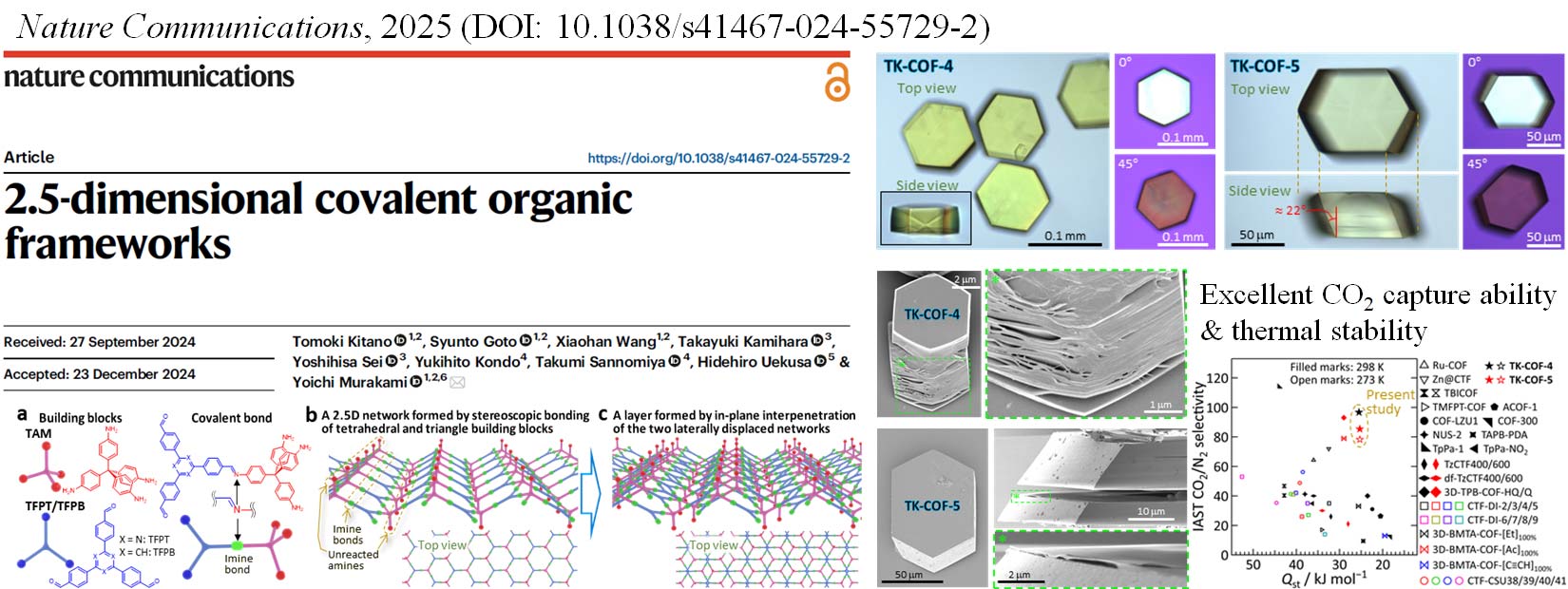
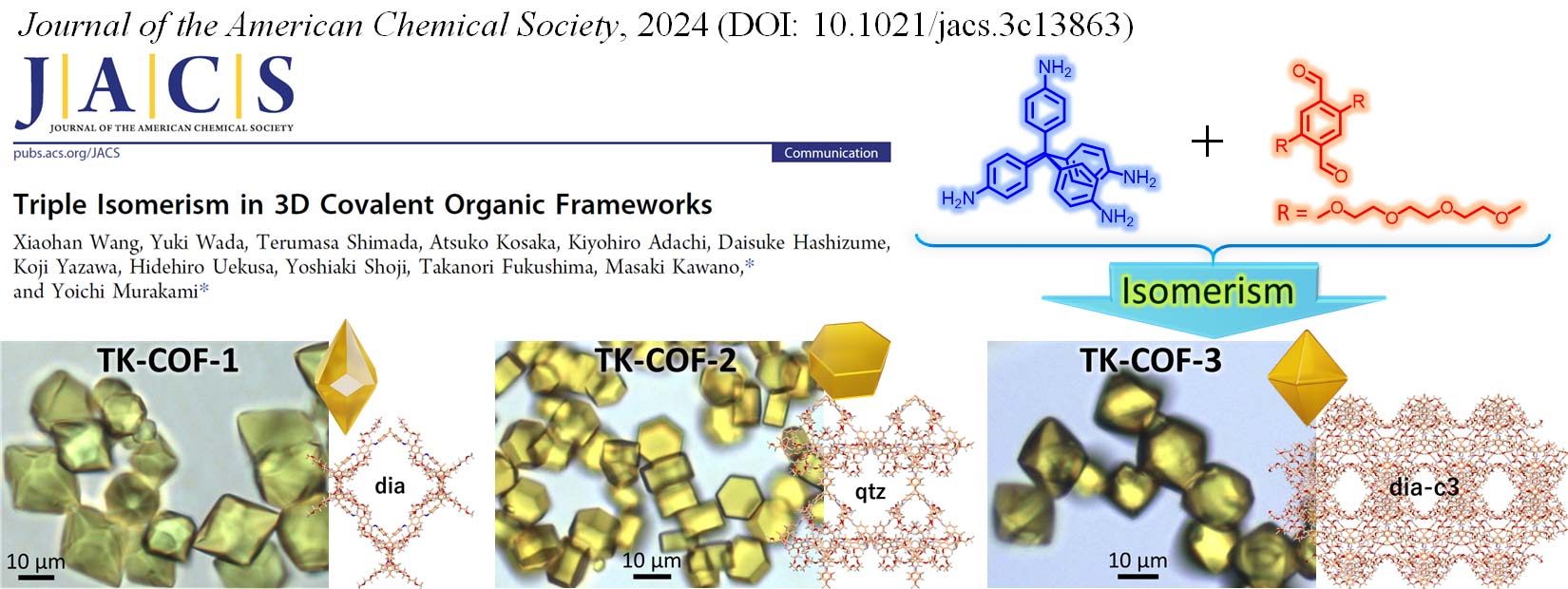
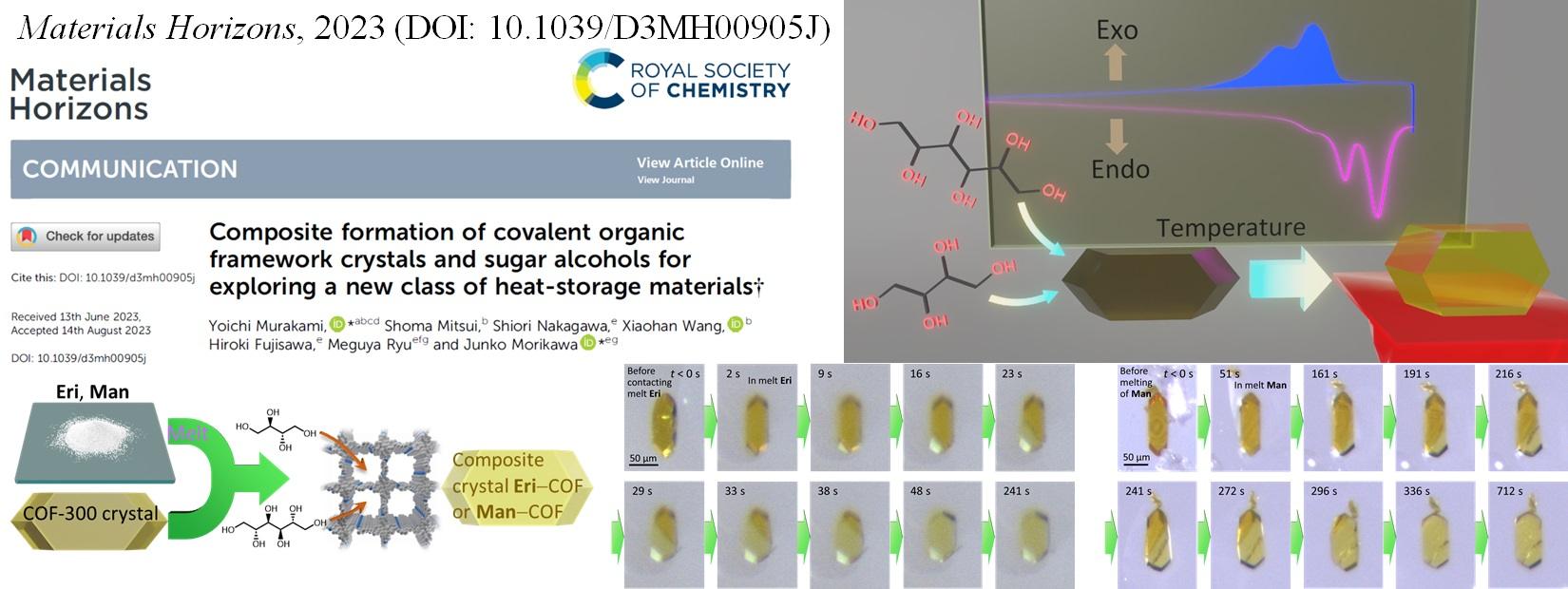
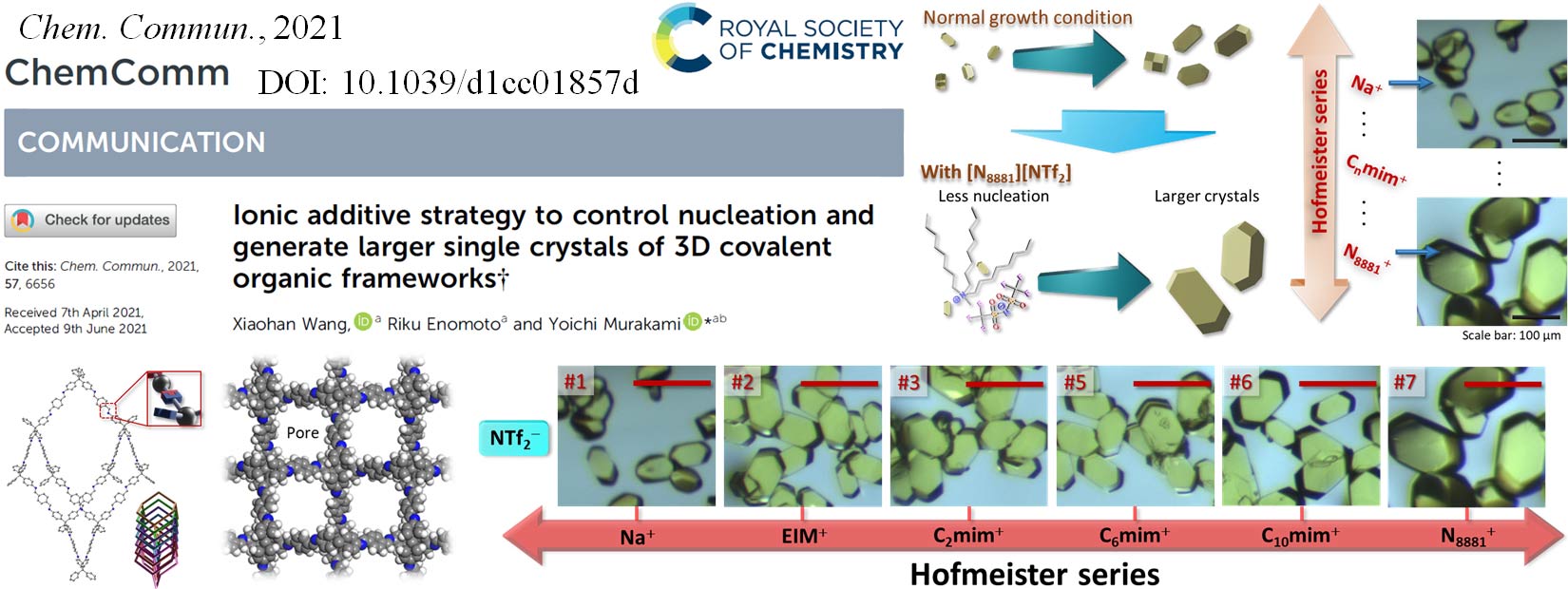
We began researching COFs in 2017. We have so far achieved the growth of high-quality, large-size single crystals through nucleation control strategy (Chem. Commun. 2021), the creation of composite heat storage materials (Mater. Horiz. 2023, news release), the diversification of framework structures through the generation of structural isomers (JACS 2024, news release), the creation of COFs with new structures and outstanding CO2 separation and capture performance (Nature Commun. 2025, news release), and the creation of electric-field-responsive COFs with new structures and dipolar rotors (JACS 2025, news release).
Currently, we believe that the two social challenges mentioned above can be solved by using COFs, which are crystalline organic porous materials, as a material base, and that we can achieve social implementation. We are working on our research every day. Also, we are aiming to create a startup based on various new technologies and materials derived from COFs, and are currently looking for partners to collaborate with.